 adrienne
Every 2.5 days, a woman in Canada is killed by her intimate partner. On November 25th, the International Day for the Elimination of Violence Against Women stands as a global call to action against this devastating reality. This annual observance marks the beginning of 16 Days of Activism against Gender-Based Violence, a period dedicated to raising awareness, demanding change, and supporting survivors across our communities.
Violence against women takes many forms—physical assault, sexual violence, psychological abuse, economic control, and coercive behaviour. In Canada, nearly half of all women have experienced at least one incident of physical or sexual violence since age 15. Indigenous women face violence at rates three times higher than non-Indigenous women, while women with disabilities, newcomers, and 2SLGBTQI+ women encounter additional barriers to safety and support. These aren’t just statistics; they represent our neighbours, colleagues, friends, and family members whose lives have been forever altered by violence.
The Elimination of Violence Against Women Day exists because silence has historically protected perpetrators while isolating survivors. This observance creates space for difficult conversations, challenges harmful attitudes, and mobilizes communities to break cycles of abuse. It reminds us that gender-based violence thrives in environments where it goes unchallenged, unreported, and unaddressed.
Recognizing this day means understanding that violence against women isn’t inevitable—it’s preventable through collective action. From supporting local shelters and education programs to challenging sexist jokes and teaching healthy relationship skills to young people, every Canadian has a role in creating safer communities. This day empowers us to move beyond awareness toward meaningful change, transforming our workplaces, schools, and neighbourhoods into spaces where all women can live free from fear.
The question isn’t whether we can end violence against women, but whether we’re willing to do the work required to make it happen.
The History Behind the International Day for the Elimination of Violence Against Women
The International Day for the Elimination of Violence Against Women carries a powerful history rooted in courage, resistance, and the fight for justice. Every year on November 25, communities worldwide honour this day, but its origins trace back to a tragedy that galvanized a movement.
In 1960, three sisters in the Dominican Republic made the ultimate sacrifice in their stand against dictatorship. Patria, Minerva, and María Teresa Mirabal, known as Las Mariposas (The Butterflies), were political activists who opposed the brutal regime of Rafael Trujillo. On November 25 of that year, while traveling to visit their imprisoned husbands, they were ambushed, beaten, and murdered by regime agents. Their deaths shocked the nation and became a catalyst for change, eventually contributing to Trujillo’s assassination months later.
Their story resonated far beyond the Dominican Republic. In 1981, Latin American feminist activists gathering in Bogotá, Colombia, chose November 25 to commemorate the Mirabal sisters and draw attention to gender-based violence. This grassroots movement grew steadily through the 1980s and 1990s, with women’s groups worldwide adopting the date for awareness campaigns and direct action.
The United Nations took notice of this global groundswell. In December 1999, the General Assembly officially recognized in 1999 November 25 as the International Day for the Elimination of Violence Against Women, giving the observance international legitimacy and reach.
Canada has embraced this global movement while addressing its own context. The date holds particular significance for Canadians, falling just days before December 6, when we remember the École Polytechnique massacre. This proximity has helped create a continuum of awareness and action throughout late November and early December, often called the 16 Days of Activism Against Gender-Based Violence.
Canadian organizations, from local women’s shelters to national advocacy groups, have woven this international day into their programming. Communities across the country organize vigils, educational events, and fundraisers that honour both the Mirabal sisters’ legacy and address violence affecting women in Canada today, including Indigenous women, immigrant women, and other marginalized communities.
The day serves as both remembrance and rallying cry, connecting historical sacrifice to contemporary activism and reminding us that the fight for women’s safety continues.
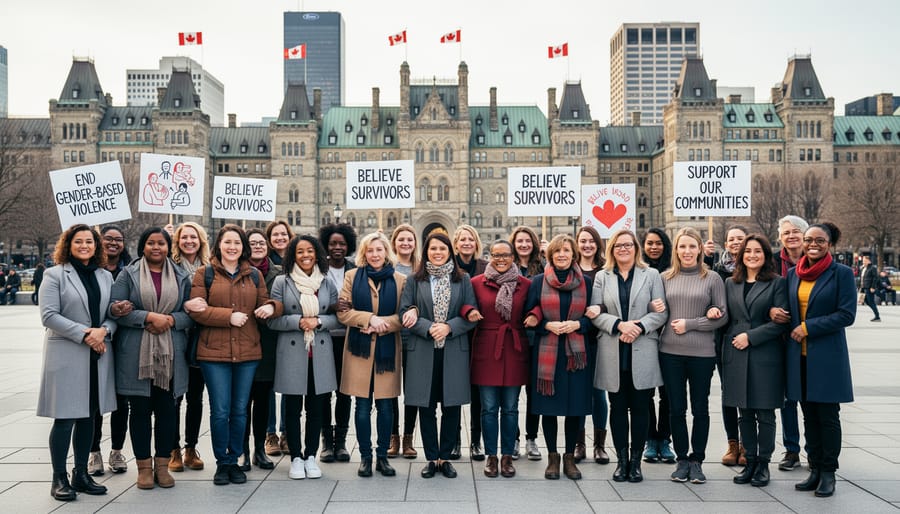
Understanding Violence Against Women in Canada Today
The Disproportionate Impact on Indigenous Women and Girls
Indigenous women and girls in Canada face violence at rates that far exceed the national average, representing a crisis that demands urgent attention on the International Day for the Elimination of Violence Against Women and every day. The epidemic of Missing and Murdered Indigenous Women and Girls (MMIWG) has devastated families and communities across the country for generations.
The National Inquiry’s Final Report, released in 2019, confirmed what Indigenous communities had long known: this violence constitutes a race-based and gendered genocide. Indigenous women and girls are twelve times more likely to be murdered or go missing than any other demographic in Canada. These aren’t just statistics; each number represents a daughter, sister, mother, and community member whose loss reverberates through generations.
The Inquiry identified systemic causes including colonialism, racism, and social and economic marginalization. It also highlighted how institutions meant to protect women have often failed Indigenous communities through discrimination and inadequate responses.
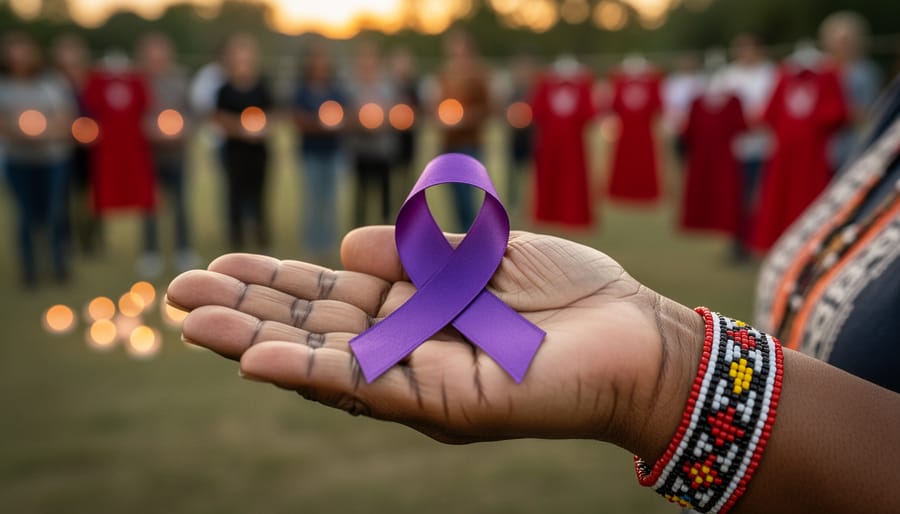
Today, grassroots organizations and Indigenous-led initiatives continue demanding justice and systemic change. Families carry forward advocacy efforts, ensuring their loved ones are not forgotten. Red dress installations, awareness walks, and vigils honour those lost while calling for accountability from governments and institutions.
Supporting MMIWG initiatives means amplifying Indigenous voices, advocating for the implementation of the Inquiry’s 231 Calls for Justice, and recognizing that eliminating violence against women requires addressing the unique barriers and discrimination Indigenous women face. True reconciliation demands we stand alongside Indigenous communities in this ongoing fight for safety, dignity, and justice.
How Canadians Observe This Day: From Awareness to Action
Across Canada, the International Day for the Elimination of Violence Against Women sparks a powerful wave of awareness and action each November 25th. This observance serves as the launching point for the global 16 Days of Activism against Gender-Based Violence campaign, which runs until December 10th (International Human Rights Day), creating over two weeks of sustained focus on ending violence against women and girls.
Communities from coast to coast to coast mark this day through diverse and meaningful initiatives. Municipal buildings, landmarks, and bridges illuminate in purple and orange – the colours representing anti-violence efforts and a brighter future free from abuse. The Purple Ribbon campaign sees thousands of Canadians wearing ribbons to show solidarity with survivors and signal their commitment to change.
Educational institutions play a vital role during this period. Universities and colleges host panel discussions, film screenings, and workshops that explore topics like consent, healthy relationships, and bystander intervention. These events create safe spaces for important conversations, helping shift attitudes and behaviours among young Canadians who will shape tomorrow’s culture.
Social media becomes a hub of collective action, with campaigns like #EndGBV, #25Nov, and #16Days amplifying voices and stories. Canadian organizations and individuals share resources, statistics, and personal testimonies that break the silence surrounding violence against women. These digital movements extend the conversation beyond physical events, reaching people in remote communities and creating networks of support nationwide.
Local organizations, women’s shelters, and advocacy groups organize vigils, marches, and community gatherings that honour survivors and remember those lost to gender-based violence. These events provide opportunities for community members to come together, learn about available resources, and demonstrate that violence against women will not be tolerated or ignored.
What makes these observances particularly powerful is their connection to tangible outcomes. Fundraising drives generate crucial resources for shelters and support services. Advocacy campaigns pressure policymakers to strengthen legislation and funding. Educational programs equip Canadians with tools to recognize warning signs and intervene safely. Workplace initiatives establish stronger harassment policies and support systems.
Through these collective efforts, Canadians transform awareness into action, creating ripple effects that reach far beyond these 16 days. Each conversation started, each donation made, and each person educated contributes to building a Canada where all women and girls can live free from violence and fear.
What You Can Do: Turning Awareness Into Lasting Change
Supporting Organizations Making a Difference
Across Canada, dedicated organizations are working tirelessly to end gender-based violence and support survivors. These groups form a vital network of resources, advocacy, and hope for women facing violence.
The Canadian Women’s Foundation funds programs nationwide that address the root causes of violence against women, including economic inequality and social attitudes. They support hundreds of community organizations doing frontline work with survivors. Women’s shelters exist in every province and territory, offering emergency housing, counseling, and safety planning. Organizations like Interval House in Toronto and Battered Women’s Support Services in Vancouver provide critical crisis intervention and long-term support.
Indigenous-led organizations such as the Native Women’s Association of Canada address the specific challenges facing Indigenous women, who experience violence at disproportionate rates. They combine cultural approaches with advocacy for systemic change.
Victim Services programs operate through provincial governments, connecting survivors with legal support, counseling, and navigation through the justice system. Meanwhile, organizations like EVA BC (Ending Violence Association of British Columbia) unite service providers to share resources and advocate for policy improvements.
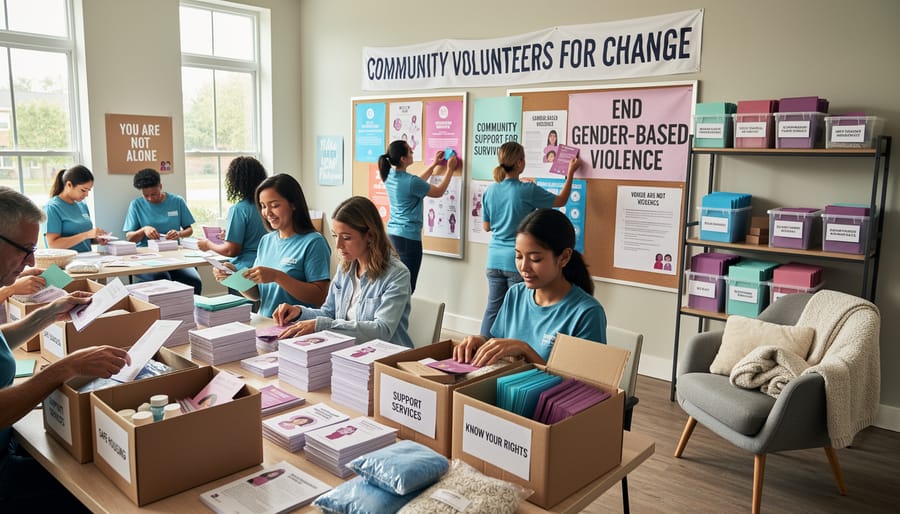
You can make a difference by supporting these organizations through monthly donations, which provide stable funding for programs. Many welcome volunteers for administrative support, fundraising events, or crisis line training. Following and sharing their social media content amplifies their messages during the elimination of violence against women day and throughout the year. Corporate matching programs can double your impact, and organizing workplace fundraisers builds collective awareness while generating crucial resources for these life-changing services.
The International Day for the Elimination of Violence Against Women stands as both a solemn moment of remembrance and a powerful call to action. Each November 25th, we honour the courage of survivors, remember those we’ve lost, and recommit ourselves to building a world where every woman can live safely and freely. But as meaningful as this day is, true change doesn’t happen in 24 hours. It unfolds through the daily choices we make, the conversations we have, and the actions we take throughout the year.
Ending violence against women requires all of us. It demands sustained commitment from individuals, communities, organizations, and governments working together toward a common vision. When we speak up against harmful attitudes, when we support survivors in our lives, when we volunteer our time or donate to women’s shelters, when we teach our children about respect and equality—these everyday acts create ripples of change that transform our society.
Across Canada, countless women and allies are already doing this work. They’re organizing in their neighbourhoods, advocating for policy changes, providing frontline support, and creating spaces where survivors can heal and rebuild their lives. Their dedication reminds us that progress is possible when we refuse to accept violence as inevitable.
The path forward won’t always be easy, but hope lives in our collective power. Hope lives in the young people learning about healthy relationships, in the communities developing innovative prevention programs, in the survivors who transform their pain into purpose, and in every person who refuses to stay silent.
This elimination of violence against women day, let your awareness become action. Reach out to a local women’s organization and ask how you can help. Educate yourself about the signs of abuse and how to support someone who discloses violence. Start conversations in your own circles about respect, consent, and equality. Donate if you can, volunteer if you’re able, and always believe survivors when they share their stories.
Together, we can create the future we envision—one where violence against women becomes a relic of the past, and every woman lives with dignity, safety, and freedom.